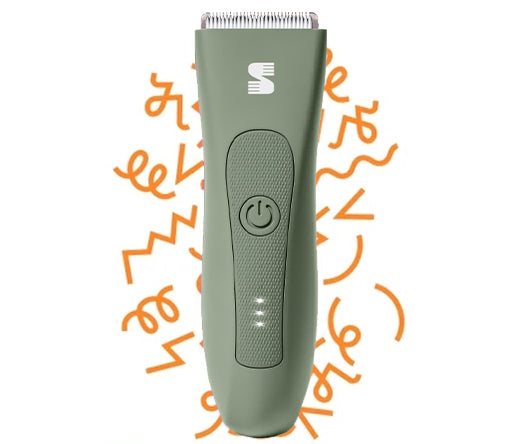
A suitable pubic hair trimmer should make it easier to shorten and control hair around the external groin area without requiring you to press hard or chase an extremely close finish. The most useful features are stable cutting performance, practical length guards, a head that is easy to position, good visibility around the cutting area, and a design that can be cleaned without difficulty. Battery life, wet-use capability, displays, and accessories may also matter, but their value depends on where and how you groom. Focus first on control and predictable length reduction. A tool that is easy to guide is usually more useful than one designed mainly to remove hair as closely as possible.
Use a Control-First Feature Framework
Before comparing individual features, decide what job the trimmer needs to perform. For most external pubic grooming, the main task is reducing long or uneven hair to a manageable length. It is not necessarily removing every visible strand at skin level.
This distinction changes what you should prioritize. A foil shaver or razor may be designed for a closer finish, while a trimmer is generally better suited to gradual length reduction. When working around loose skin, curves, and areas that are difficult to see, gradual cutting gives you more opportunities to adjust your hand position.
A useful comparison framework has four parts:
-
Length control: Can the tool reduce hair in predictable stages?
-
Handling: Can you guide the head without excessive pressure or awkward wrist angles?
-
Visibility: Can you see where the cutting edge is moving?
-
Maintenance: Can you remove hair and residue from the cutting area easily?
Evaluate these areas before considering extra accessories. A long feature list does not automatically make a trimmer easier to control.
Features That Directly Affect Trimming
Cutting Head Role
The cutting head determines how hair enters the blade area and how easily you can approach different contours. A wider head may cover open areas faster, while a narrower head may be easier to position around smaller sections. Neither option is automatically better.
Look at whether the head shape allows you to see its leading edge. If a large housing blocks your view, you may find yourself repeatedly stopping to check your progress. A visible cutting path can be especially useful when trimming near folds or changing direction.
The head should move through hair without requiring repeated force. Tugging may occur when too much hair enters the blade at once, when the battery is running low, or when the head needs cleaning. Reducing hair gradually and moving more slowly may help, but persistent pulling is a reason to stop and inspect the tool.
Length Guards
Length guards are among the most practical features because they create space between the cutting edge and the skin while helping you maintain a more even result. They also let you begin conservatively instead of guessing how much hair the bare blade will remove.
A useful guard system should be simple to identify, attach, and remove. The guard should remain secure when it changes direction through thicker hair. If it flexes excessively or detaches easily, the selected length may become less predictable.
Start with a longer setting when using an unfamiliar tool. You can shorten the hair in another pass, but you cannot immediately reverse a cut that is shorter than intended. This staged approach also reduces the amount of hair entering the blade at one time.
After you understand the role of the head and guards, you can compare category options such as a pubic hair trimmer for men by asking how its design supports controlled pre-trimming rather than judging it only by how closely it can cut.
Grip and Angle Control
Groin grooming often requires changes in direction. A handle that feels stable when held upright may become difficult to control when turned sideways or used with the opposite hand.
Check the handle shape, button placement, and surface texture. A power button that sits directly under your gripping fingers may be pressed accidentally. A very smooth body may also become harder to hold when your hands or the tool are wet.
Weight distribution matters as much as total weight. A head-heavy tool may feel less precise during small movements, while an extremely light tool can sometimes encourage fast, sweeping passes. The goal is not the lowest possible weight. It is a balanced design that allows slow, deliberate movement.
Visibility
Visibility is partly determined by the tool and partly by your grooming setup. A compact head, an unobstructed blade edge, and a housing that does not cast a large shadow can help. Bright bathroom lighting and a stable position are equally important.
Built-in lights may be useful in some situations, but they are optional rather than essential. A small light cannot compensate for an awkward cutting head or poor room lighting. It may also collect residue around the lens, adding another surface that needs cleaning.
Useful Features Versus Optional Features
Some features can improve convenience without changing the basic quality of length control. Separating essential functions from optional ones makes comparison easier.
| Feature | Why It May Matter | What to Check |
|---|---|---|
| Secure length guards | Support gradual, even trimming | Attachment strength and useful settings |
| Visible cutting edge | Helps guide the head around contours | Whether the housing blocks your view |
| Stable grip | Supports slow movement and angle changes | Texture, balance, and button placement |
| Washable cutting head | Makes hair removal easier | Which parts can be rinsed |
| Battery indicator | Reduces the chance of stopping mid-session | Whether the display is clear and useful |
| Travel lock | Helps prevent accidental activation | How easily it can be engaged |
| Built-in light | May improve visibility in shadowed areas | Whether it genuinely illuminates the blade path |
| Large accessory kit | May support multiple grooming tasks | Whether you will actually use the attachments |
Charging convenience can matter if the trimmer is used frequently. Consider charging time, expected operating time, connector type, and whether the tool works only cordless. Do not assume that a high battery-capacity claim automatically produces better real-world performance.
Wet-and-dry capability is also a use-condition feature rather than a guarantee of better trimming. Some people prefer dry trimming because hair is easier to see and lift. Others prefer grooming in or near the shower because cleanup is simpler. Follow the manufacturer’s instructions on which parts may be exposed to water.
Cleaning and Maintenance
Hair trapped around the blade can reduce cutting efficiency and may contribute to pulling. Clean the head after each use according to the manufacturer’s directions, especially when trimming dense or longer hair.
A removable head can make cleaning easier, but inspect how it reconnects. Small clips and narrow channels may collect residue or become difficult to reach. Included brushes can help remove dry hair, while rinsing may be appropriate only for parts specifically described as washable.
Allow rinsed components to dry before reassembly or storage. Keeping a damp trimmer in a closed bag may encourage odor and residue buildup. Store guards where they will not bend, because a damaged guard may no longer maintain a consistent distance from the cutting edge.
Blade-care requirements vary. Some cutting systems require occasional lubrication, while others are designed for use without added oil. Use only the maintenance method recommended for the tool instead of applying household oils or cleaning chemicals.
Replace or inspect the cutting head when it becomes damaged, misaligned, unusually noisy, or consistently pulls hair after cleaning and charging. Continued pressure is not a suitable response to declining cutting performance.
Questions to Ask Before Buying
Use the following questions to keep the decision focused on practical use:
-
Is the tool mainly intended for shortening hair, close shaving, or both?
-
Are the included guards suitable for the lengths I am likely to use?
-
Can I see the cutting edge while changing direction?
-
Does the handle remain stable in different hand positions?
-
Can the head be cleaned without complicated disassembly?
-
Which parts are washable, and under what conditions?
-
Does the battery indicator provide enough warning before power drops?
-
Are replacement heads or guards available if a component wears out?
-
Do the included accessories solve a real grooming need?
-
Can the tool be stored without bending the guards or exposing the blade?
Also consider your own routine. Someone trimming occasionally may value simple storage and low maintenance. Someone grooming frequently may care more about charging convenience, replacement-part access, and fast cleaning.
Avoid treating “skin-safe,” “nick-free,” or similar marketing phrases as guarantees. Results can depend on hair length, skin condition, hand pressure, guard choice, blade condition, and technique.
Know When to Stop
Conservative grooming includes recognizing when not to continue. Stop using the trimmer if the head is pulling repeatedly, the housing becomes unusually hot, the guard is loose, or the blade appears damaged.
Do not continue over broken, inflamed, swollen, or already irritated skin. Pause if you experience pinching, sharp discomfort, or worsening irritation. Persistent symptoms or concerns about a skin condition should be assessed by a qualified healthcare professional rather than treated through further grooming.
Use light contact and short passes. Keep the skin surface as steady as practical, avoid rushing over folds, and remove longer hair in stages. These habits cannot eliminate every risk, but they give you more control than pressing harder or repeatedly passing over the same area.
Choose for Predictability
The most useful pubic hair trimmer is not necessarily the one with the largest accessory kit, the closest cutting claim, or the most advanced display. It is the one that helps you shorten hair gradually, see the cutting path, maintain a stable angle, and clean the cutting system properly.
Prioritize the head, guards, grip, visibility, and maintenance process. Treat charging options, lights, wet-use capability, and travel accessories as secondary factors based on your routine. A control-first decision makes it easier to choose a tool that supports manageable length and deliberate grooming without relying on unsupported promises.